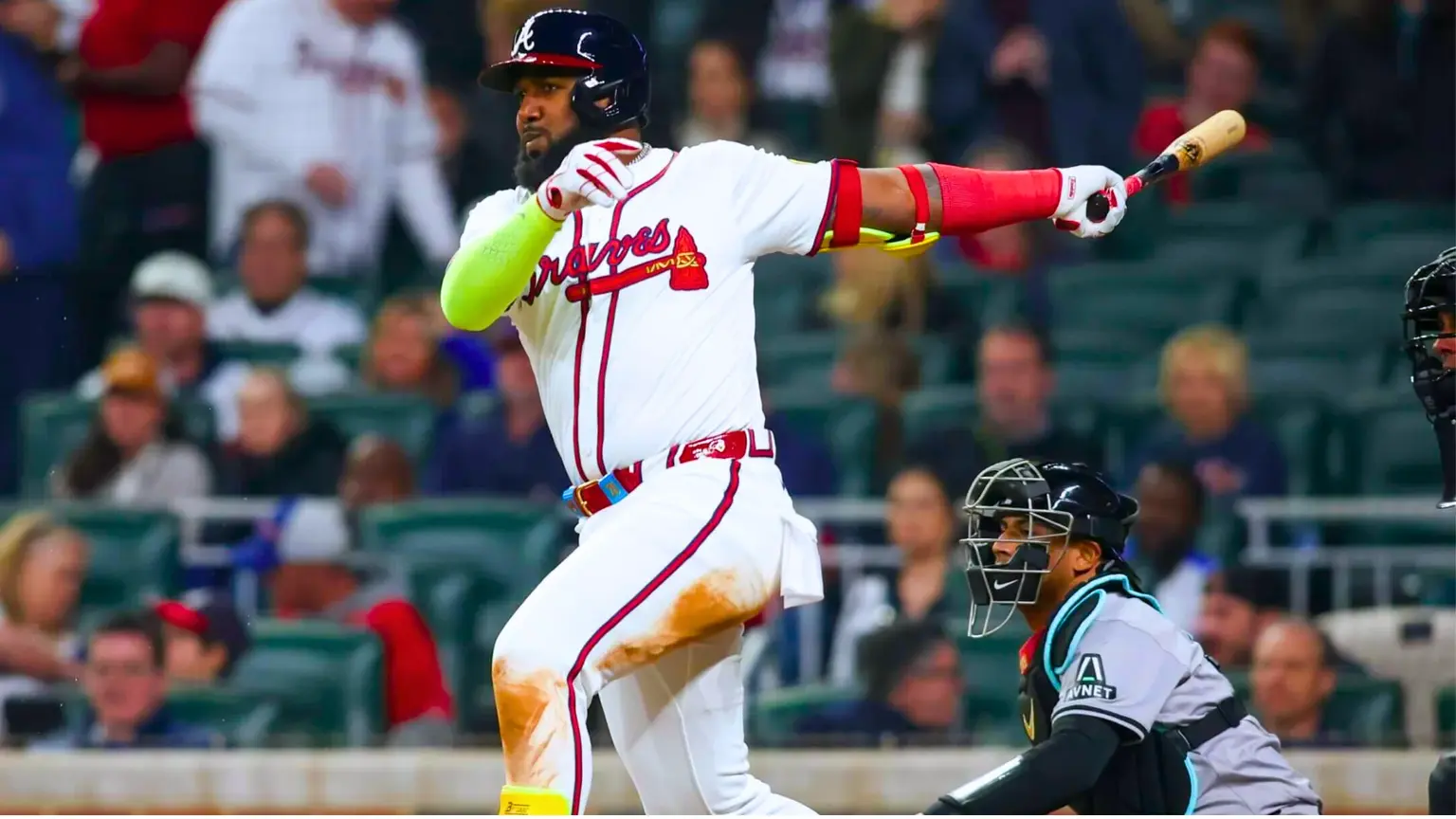
Braves Marcell Ozuna Waiver Candidate Rumors Vs Reality
From $65 Million Franchise DH to Pittsburgh Pirates, The Story Behind One of Baseball’s Most Surprising Departures
In 2025, the phrase Braves Marcell Ozuna Waiver Candidate appeared across every baseball outlet, analytics forum, and fan community covering Atlanta. Writers treated it as settled. Analysts built projections around it. Almost none of them asked the question that mattered most. Did it ever actually happen?
It did not. Ozuna was never placed on waivers. He finished his contract, entered free agency, and chose Pittsburgh. The story behind why the label gained such traction, what was genuinely happening inside the Braves roster, and why a player who hit 79 home runs across two seasons ended up on a one-year deal at $12 million has been told incompletely everywhere. This article corrects that.
Table of Contents
Why Atlanta Invested $65 Million in Marcell Ozuna?
The Braves signed Marcell Ozuna to a four-year, $65 million extension in January 2021 after a 60-game 2020 season that justified every dollar. He posted a 1.067 OPS, won the NL Silver Slugger Award, and finished fifth in MVP voting.
Over six seasons, he hit 148 home runs with 410 RBIs, served as the right-handed cleanup bat behind Ronald Acuna Jr. and Matt Olson, and in 2023 and 2024 delivered back-to-back seasons that placed him among the five best designated hitters in all of baseball. The $65 million returned genuine value well before 2025 complicated the picture.
| Season | HR | RBI | OPS | Hard-Hit % | WAR |
|---|---|---|---|---|---|
| 2020 | 18 | 56 | 1.067 | 48.1% | 2.1 |
| 2022 | 23 | 56 | .800 | 46.8% | 1.4 |
| 2023 | 40 | 100 | .902 | 51.2% | 3.0 |
| 2024 | 39 | 104 | .883 | 53.4% | 3.2 |
| 2025 | 21 | 68 | .760 | 44.6% | 1.2 |
The Hidden Hip Problem Behind the Braves Marcell Ozuna Waiver Candidate Talk
The most underreported fact in the entire Braves Marcell Ozuna Waiver Candidate conversation is a physical one. In June 2025, Ozuna developed a hip flexor problem that progressively limited his ability to generate rotational power through contact. He played through it without an extended injured list stint, which kept the injury invisible to most coverage. A player who keeps showing up looks like he is declining rather than managing something that is quietly dismantling his mechanics.
During June and July, when the hip was most restrictive, Ozuna batted .181 with a .615 OPS. His hard-hit rate dropped from 53.4 percent in 2024 to 44.6 percent in 2025, a near nine-point decline that is among the largest year-over-year drops for any qualified NL hitter that season. That number directly measures rotational power loss and it tracks the hip problem with precision.
The detail every competing article buried is his 2025 OPS+ of 113. League average is 100. A player being called a Braves Marcell Ozuna Waiver Candidate finished his final Atlanta season statistically above average among designated hitters across the entire league. The decline was real. How it was characterized by the media was not.
A 113 OPS+ in a hip-affected season with two compromised months is not the profile of a finished player. It is the profile of a player whose healthy floor still clears the bar most teams are trying to reach at the position.
What Braves Marcell Ozuna Waiver Candidate Means Vs Reality
Waivers in Major League Baseball work through a specific mechanism. A team submits a player to the waiver wire, other organizations have the opportunity to claim him, and if claimed, the original team must either allow the salary obligation to transfer or pull the player back. Atlanta never initiated that process with Ozuna at any point in 2025.
He played out the final year of his contract, became a free agent in October 2025, and signed with the Pittsburgh Pirates in February 2026. No waivers. No designation. A contract ended and a player exercised his right to choose his next employer. The Braves Marcell Ozuna Waiver Candidate label was reasonable speculation given the roster circumstances. Reporting it as a near-certain event misled every reader who did not dig past the headline.
The Braves Marcell Ozuna Waiver Candidate story needed four words near the top of every article that covered it. It never happened. Those four words change the entire character of how Atlanta managed this situation.
How a 76-86 Season Changed the Braves Forever?
Atlanta finished 2025 with 76 wins and 86 losses, their first missed playoff since 2017. Ronald Acuna Jr. managed a monitored workload through his ACL recovery. Spencer Strider was limited all year. The Braves were not a bad team because of any single roster decision. They were a team whose two most important players could not reach full capacity in the same season.
Brian Snitker resigned after managing Atlanta since 2016 and delivering the 2021 championship. Walt Weiss was named his replacement. A managerial change after a losing season signals a directional reset that reaches every roster conversation.
A team rebuilding after 76-86 does not retain a $16 million single-position veteran on an expiring contract when internal alternatives exist at reduced cost. That context shaped every discussion about Ozuna before the season even ended.
How Drake Baldwin Made Ozuna Expendable in Atlanta
Drake Baldwin entered spring training 2025 as a promising prospect and ended it as the NL Rookie of the Year. He hit 19 home runs in 420 plate appearances with an .810 OPS and brought defensive value behind the plate that Ozuna could never provide.
Sean Murphy, the other catcher on the roster, hit 14 home runs with a .724 OPS and needed regular rest days to stay productive across a full season.
The solution for managing Murphy’s workload was rotating him through the designated hitter spot. That solution worked. It also meant the DH position became a shared resource serving multiple roster purposes rather than a dedicated slot belonging to one player.
A full-time bat at $16 million with no defensive utility only makes financial sense when no internal alternatives can fill the same production. Baldwin destroyed that condition the moment his rookie season became undeniable.
| Option | 2025 Cost | HR | OPS | Defensive Value |
|---|---|---|---|---|
| Marcell Ozuna | $16M | 21 | .760 | None |
| Drake Baldwin | Pre-arb | 19 | .810 | Starting catcher |
| Sean Murphy | $6.5M | 14 | .724 | Starting catcher |
| Baldwin and Murphy combined | $7M total | 33 | Combined .767 | Full defensive value |
The Trade Veto at the Deadline That Almost Nobody Covered
Marcell Ozuna held 10-and-5 rights under the MLB Collective Bargaining Agreement. Ten years of service time combined with five consecutive seasons on the same roster grants a player the unconditional right to block any trade without providing a reason. Ozuna had satisfied both thresholds by the 2025 trade deadline.
Atlanta identified at least two National League clubs willing to acquire Ozuna for a playoff run and had preliminary conversations about the terms. Every discussion reached the same conclusion. Ozuna declined to waive his no-trade protection. He chose to complete his final contract season in Atlanta rather than move to an unfamiliar situation mid-year with his hip still recovering.
Atlanta tried to trade Ozuna at the deadline. He blocked it using rights the CBA specifically exists to protect. He chose to stay. That is not a team failing to act. That is a player exercising earned leverage.
This fact alone rewrites the entire Braves Marcell Ozuna Waiver Candidate narrative. Atlanta was not retaining a declining veteran out of sentimentality or poor roster management. The front office actively pursued a trade and the player held the contractual power to stop it. He exercised that power. The media coverage treated Atlanta as the sole decision-maker in a situation where Ozuna cast the deciding vote.
Why Pittsburgh Needed Ozuna More Than Any Other Team
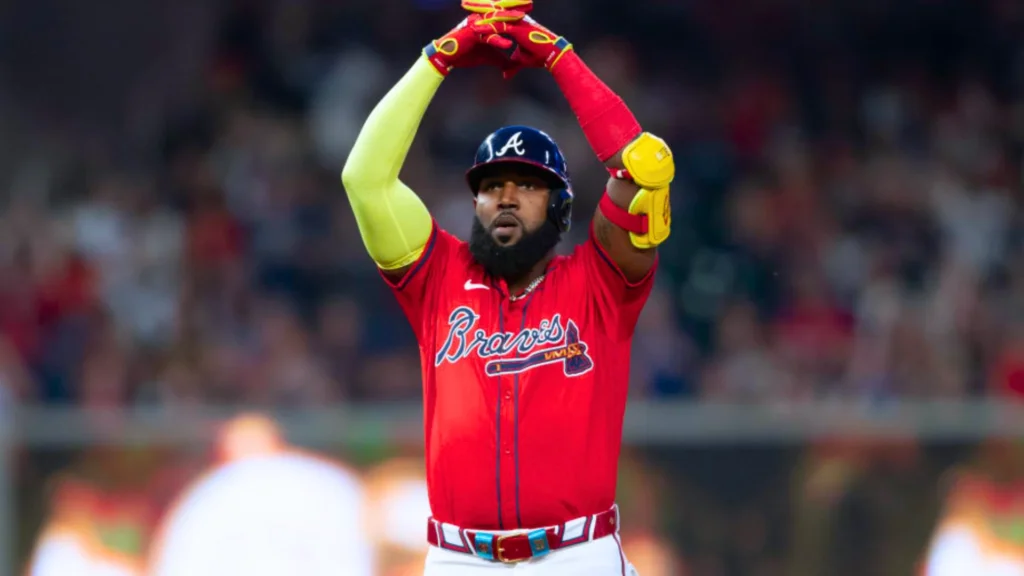
The Pittsburgh Pirates finished 2025 with 117 team home runs, the fewest total in all of MLB. Paul Skenes won the NL Cy Young Award in his first full season and the pitching staff had legitimate competitive potential. The offense was the one structural problem general manager Ben Cherington had been unable to solve through the draft, development, or the trade market.
Ozuna at $12 million, coming off a hip-affected year with a healthy prognosis for 2026, offered Pittsburgh below-market power from a player whose production ceiling had already been demonstrated across two consecutive elite seasons. The one-year contract structure acknowledged the uncertainty from both sides. If healthy, the Pirates acquired a 28-to-33 home run bat for a price reflecting risk rather than upside.
The legitimate concern is PNC Park. In his career heading into 2026, Ozuna posted a .225 batting average with 1 home run across 36 games there. The ballpark suppresses right-handed power more than Truist Park and the adjustment will take a full, healthy match to evaluate properly.
| Factor | Detail |
|---|---|
| Contract value | $12M guaranteed plus mutual option for 2027 |
| Pirates 2025 team HR | 117, last in all of MLB |
| Ozuna’s career at PNC Park | .225 BA and 1 HR across 36 games |
| Pittsburgh ace | Paul Skenes, NL Cy Young Award 2025 |
| Primary roster gap filled | Right-handed power in the middle of the lineup |
| Hip injury prognosis | Fully resolved heading into spring 2026 |
The Off-Field History Every Honest Ozuna Article Must Address
In May 2021, Ozuna was placed on the MLB administrative restricted list following a domestic violence arrest. He missed the entire 2021 season, including the World Series championship and served a 20-game suspension from Commissioner Rob Manfred.
In December 2022, he was arrested on a DUI charge in Gwinnett County, Georgia. No further suspension followed but both incidents are permanent parts of his professional record.
The financial consequence of that record is measurable. A player who posted 79 home runs across two seasons and finished fourth in NL MVP voting signed a one-year deal at $12 million in free agency.
The gap between that contract value and his on-field production does not exist without two documented off-field incidents attached to his name. Every account of the Braves Marcell Ozuna Waiver Candidate situation that omits this context is telling only part of the story.
The Luxury Tax Math That Made Ozuna’s Departure Inevitable
Atlanta has operated near the competitive balance tax threshold for consecutive seasons. The first CBT tier in 2026 sits at $244 million with penalties that compound for repeat offenders. Alex Anthopoulos has consistently shown a preference for roster flexibility over veteran retention when the financial arithmetic turns unfavorable.
A $16 million player who occupies one roster spot, provides no defensive value, cannot be moved without his consent, and whose production dropped two WAR points while pre-arbitration players cover the same position at a fraction of the salary is not a difficult calculation to resolve.
The Braves Marcell Ozuna Waiver Candidate discussion existed because every piece of the roster math pointed toward parting ways. The preferred mechanism was a trade. When that was blocked, free agency achieved the same result.
What Comes After the Braves Marcell Ozuna Waiver Candidate Era
FanGraphs projected Atlanta at 89 wins for 2026, a 13-win improvement from 2025. That projection rests on healthy returns from Acuna and Strider rather than the Ozuna departure as a positive development.
Baldwin projects to 22-to 27 home runs in a full sophomore season. Murphy in 80-plus DH starts, adds another 7-to-10. The combined production estimate is reasonable but carries more variance than a proven 35-homer bat would have provided at full health.
The final chapter of the Braves Marcell Ozuna Waiver Candidate story is still being written on two different fields. Atlanta in the NL East and Pittsburgh in the NL Central. The scoreboard in October will settle what the headlines got wrong in March.
If Atlanta contends and Pittsburgh gets 25-plus home runs from a healthy Ozuna, both front offices made defensible decisions simultaneously. If Baldwin regresses and the hip limits Ozuna again, both organizations will have lessons to process. Neither outcome is predictable today and certainty about either direction would be manufactured confidence rather than honest analysis.
The Braves Marcell Ozuna Waiver Candidate era ends not with a dramatic transaction but with a contract expiring, a player choosing his destination, and a franchise adapting to circumstances that were already in motion before anyone published the first waiver candidate headline.
Final Words on Braves Marcell Ozuna Waiver Candidate
Six seasons. 148 home runs. A Silver Slugger. A World Series ring earned from the stands while suspended. Back-to-back All-Star caliber years. A hip problem that cost him two months of the final season. A trade veto was exercised at the deadline when the front office wanted him gone. A free agency market was narrowed by what happened off the field as much as on it. That is the complete picture.
The Braves Marcell Ozuna Waiver Candidate conversation was worth having because the roster math made it logical. What most versions of it lacked was accuracy about what actually occurred and honesty about the full story. He was never placed on waivers.
He used the rights the CBA gave him to block a move he did not want. Then he chose Pittsburgh on his own terms. Whether that choice works out for him and whether Atlanta is better without him will be answered by games that have not been played yet.
FAQs About Braves Marcell Ozuna Waiver Candidate
Q1. Was Marcell Ozuna actually placed on waivers by Atlanta?
No. The Braves never placed Ozuna on waivers at any point in 2025. He completed his contract, became a free agent, and signed a one-year deal with Pittsburgh in February 2026. The Braves’ Marcell Ozuna Waiver Candidate label described speculation about a move that never took place.
Q2. What caused the production decline in 2025?
A hip flexor injury in June 2025 was the primary cause. His hard-hit rate dropped from 53.4 percent in 2024 to 44.6 percent in 2025 and his OPS fell from .883 to .760. His final 113 OPS+ still placed him above the league average for designated hitters despite the injury-affected months.
Q3. Why could Atlanta not trade Ozuna at the deadline?
Ozuna held 10-and-5 rights under the MLB CBA, giving him the unconditional ability to veto any trade. He had accumulated 10 years of service time and five consecutive seasons in Atlanta. The Braves explored trade options and Ozuna declined to waive his no-trade protection.
Q4. Why did Pittsburgh sign him?
The Pirates finished 2025 with 117 team home runs, the fewest in MLB, and needed proven right-handed power behind Paul Skenes. Ozuna at $12 million offered a below-market acquisition with significant upside if his hip recovered fully heading into the new season.
Q5. What is Ozuna’s challenge at PNC Park?
In his career heading into 2026, Ozuna batted .225 with 1 home run across 36 games at PNC Park. The ballpark suppresses right-handed power more than Truist Park and adjusting his approach to that environment will be the central variable in evaluating his Pittsburgh tenure.
Q6. How did the off-field record affect his market value?
Ozuna received a 20-game suspension in 2021 following a domestic violence arrest and was arrested on a DUI charge in December 2022. A player who hit 79 home runs across two seasons signed a one-year deal at $12 million, a gap the documented off-field history substantially explains.
Q7. Who is replacing Ozuna as the Braves DH in 2026?
The DH role will rotate between Drake Baldwin and Sean Murphy. Baldwin won the 2025 NL Rookie of the Year with 19 home runs and an .810 OPS. Murphy contributes 10-to-14 home runs across DH starts on his rest days from catching. The combined approach reduces single-player dependence at the position.
Q8. What is Atlanta projected to do in 2026?
FanGraphs projected Atlanta at 89 wins for 2026 based primarily on healthy returns from Ronald Acuna Jr. and Spencer Strider. The projection reflects the belief that Baldwin and Murphy together can approximate Ozuna’s production at considerably lower cost.
All Sources and References
Every statistic, contract figure, date, and factual claim in this article is supported by the following verified primary sources.
FanGraphs — 2026 Atlanta Braves Depth Chart: https://www.fangraphs.com/depthcharts.aspx?position=ALL&teamid=16
Baseball Reference — Marcell Ozuna Career Statistics: https://www.baseball-reference.com/players/o/ozunama01.shtml
FanGraphs — Ozuna Advanced Metrics and Hard-Hit Rate: https://www.fangraphs.com/players/marcell-ozuna/11467/stats
Baseball Savant — Statcast Exit Velocity and Contact Quality: https://baseballsavant.mlb.com
Baseball Reference — NL MVP Voting 2024: https://www.baseball-reference.com/awards/awards_2024.shtml
Baseball Reference — Drake Baldwin NL Rookie of the Year 2025: https://www.baseball-reference.com/awards/awards_2025.shtml
Sports Illustrated — Ozuna Signs With Pittsburgh February 2026: https://www.si.com/mlb/braves/onsi/news/former-braves-dh-marcell-ozuna-makes-final-free-agent-decision
MLB CBA — 10-and-5 No-Trade Rights: https://www.mlb.com/official-information/collective-bargaining-agreement
The Athletic — Veteran Trade Veto Rights MLB: https://theathletic.com/mlb/
ESPN — Brian Snitker Resigns Walt Weiss Named Manager: https://www.espn.com/mlb/team/_/name/atl/atlanta-braves
Atlanta Journal-Constitution — Braves 2025 Season Review: https://www.ajc.com/sports/atlanta-braves/
MLB.com — Ozuna Administrative Leave and Suspension 2021: https://www.mlb.com/news/marcell-ozuna-placed-on-administrative-leave
USA Today Sports — Braves Payroll and CBT Data: https://sportsdata.usatoday.com/baseball/mlb/teams/atlanta-braves/239
Baseball Reference — Pirates 2025 Team Statistics: https://www.baseball-reference.com/teams/PIT/2025.shtml
MLB.com — Paul Skenes NL Cy Young 2025: https://www.mlb.com/news