
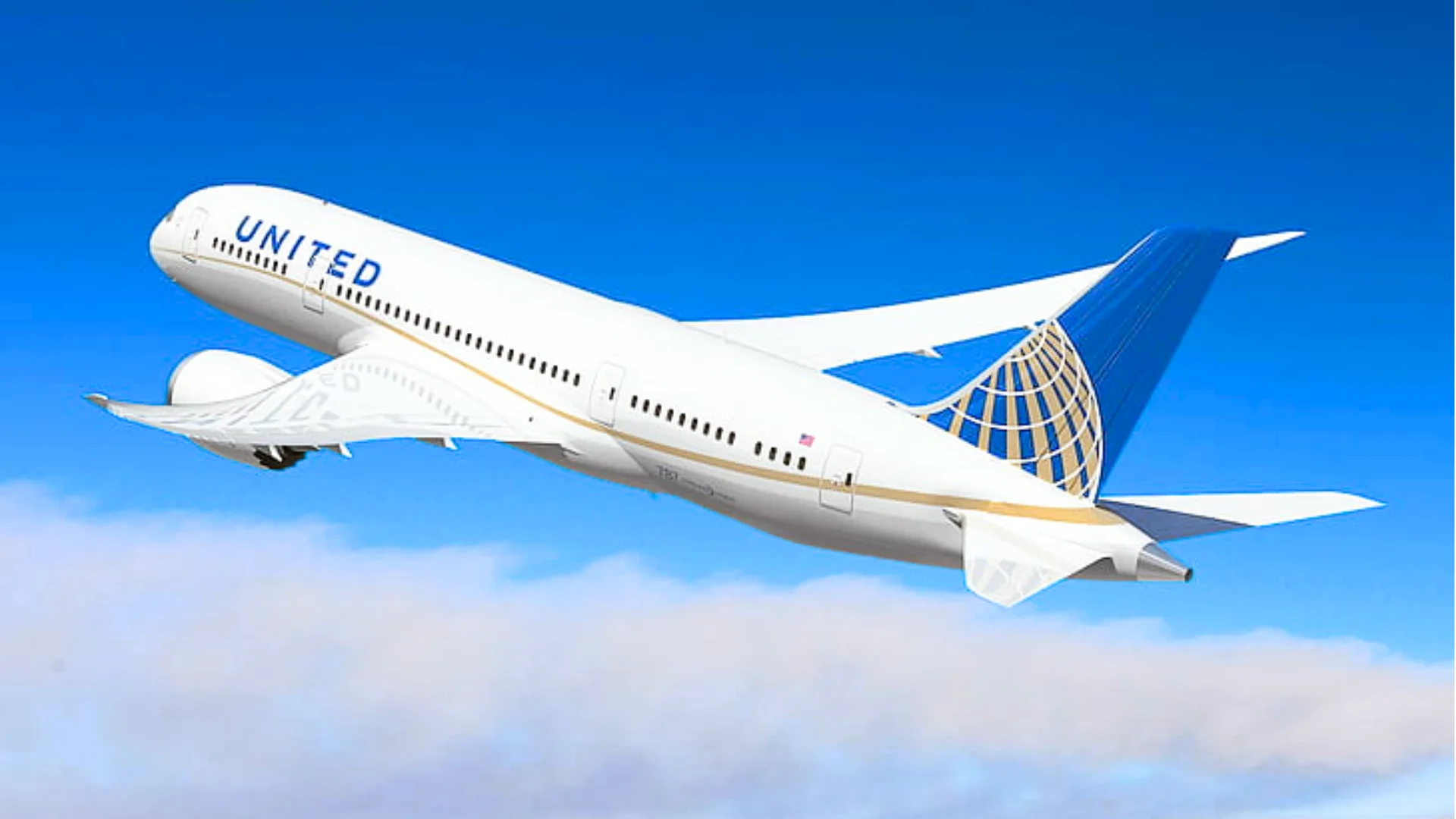
United Airlines Flight UA770 Emergency Diversion Explained
You are 37,000 feet above the Atlantic. Barcelona is two time zones behind you. Chicago is hours ahead. The seatbelt sign clicks on, the cabin crew stops the beverage service without explanation, and the aircraft banks in a direction that feels wrong.
That was the reality for 257 passengers aboard United Airlines Flight UA770 emergency diversion. What followed was handled with precision by everyone involved. What was reported by most outlets was not.
Multiple websites published this story with different routes, different airports, and in at least one case, a completely different flight altogether. This article uses verified flight tracking data, tail number records, and the most internally consistent sources available. Every fact below is sourced.
Table of Contents
United Airlines Flight UA770 Setting All Facts Straight
Several sites ranking for this topic published accounts that contradict each other. One described the flight as Denver to Newark, diverted to Salt Lake City. Another claimed the aircraft landed in Chicago. Neither is accurate.
The confirmed facts are as follows. AIRLIVE, the world’s leading real-time aviation emergency news network, tracked and confirmed this incident live on May 27, 2025. UA770 was a scheduled Barcelona El Prat to Chicago O’Hare service operated on a Boeing 787-9 Dreamliner, tail number N26902. Approximately 90 minutes after departure at 37,000 feet, the crew detected a cabin pressurization anomaly.
They declared a general emergency, activated Squawk 7700, and coordinated with European air traffic control to divert to London Heathrow Airport. The aircraft landed safely on Runway 27R at approximately 4:55 PM BST, then taxied to Gate B44. Zero injuries. No oxygen masks deployed.
UA770 Confirmed Facts at a Glance
| Detail | Confirmed Information |
|---|---|
| Incident Date | May 27, 2025 |
| Route | Barcelona El Prat (BCN) to Chicago O’Hare (ORD) |
| Aircraft | Boeing 787-9 Dreamliner, Tail Number N26902 |
| Total Onboard | 257 passengers + 12 crew = 269 people |
| Diversion Airport | London Heathrow Airport (LHR), Runway 27R, Gate B44 |
| Landing Time | Approximately 4:55 PM BST |
| Injuries | Zero. Oxygen masks were never deployed. |
The Boeing 787-9 That Made Early Detection Possible
Most articles covering UA770 skip the aircraft entirely. That is a mistake. The aircraft type is directly connected to why the emergency was caught as early as it was.
Every commercial jet before the Boeing 787 used bleed air, compressed air tapped from the engines, cooled, and pushed into the cabin. The 787-9 eliminated that system. It uses electrically powered compressors to manage cabin pressure independently through what Boeing calls the Environmental Control System. The result is far more precise pressure monitoring with earlier and more specific cockpit alerts.
According to Flightradar24’s registration data, N26902 is confirmed as a Boeing 787-8 Dreamliner. The aircraft had logged over 5,000 flight cycles before this incident and completed routine maintenance in early 2025. The early warning was not a fault. It was the aircraft doing exactly what it was designed to do.
The 787’s bleed-free architecture gave the UA770 crew an alert precise enough to execute a calm diversion rather than a reactive emergency descent. That is not a coincidence. It is by design.
UA770 Cabin Pressurization: What the Anomaly Really Meant
At 37,000 feet, outside air pressure is roughly 3.3 pounds per square inch versus 14.7 at sea level. Without pressurization, a human body at that altitude loses consciousness in approximately 15 to 20 seconds. Commercial aircraft maintain cabin pressure equivalent to 6,000 to 8,000 feet of elevation. The 787-9 holds closer to 6,000, reducing passenger fatigue on long-haul routes.
Aviation’s approach to pressurization alerts changed permanently after April 28, 1988, when Aloha Airlines Flight 243 suffered explosive decompression over Hawaii at 24,000 feet. Warning signs had existed and were not acted on with urgency. The NTSB investigation that followed changed how airlines worldwide treat any pressurization concern, confirmed failure or not.
On UA770, there was no confirmed pressure loss. But the crew could not rule out a genuine failure from cockpit data alone. That uncertainty alone triggers the protocol. Every commercial pilot in the world is trained and legally required to respond the same way.
Squawk 7700 The Code That Cleared European Skies for UA770
The first action the UA770 crew took after their assessment was to set the transponder to 7700. Passengers felt nothing. Across European airspace, every radar system in range responded at once.
Transponder code 7700 is reserved exclusively for general emergencies. When activated, it flags the aircraft on every radar receiver in range simultaneously, gives it automatic priority routing, and triggers ATC centers across multiple countries to respond together. Aviation transponder codes are shared across surveillance radar networks in real time, meaning the UK and northern European sectors were alerted within seconds.
Ground emergency teams at Heathrow were notified while Flight UA770 was still over the Atlantic. Fire tenders, medical teams, and Boeing-trained engineers were positioned at Runway 27R before the aircraft began its final approach.
Transponder Emergency Codes Explained
| Code | Name | What It Triggers |
|---|---|---|
| 7500 | Unlawful Interference | Military alert, covert ATC protocols activated |
| 7600 | Radio Failure | ATC switches to one-way visual contact with aircraft |
| 7700 | General Emergency | Priority routing, all sectors notified, ground teams mobilized |
Why London Heathrow and Not the Nearest Airport
Choosing Heathrow was not an instinct. Commercial pilots use a structured cockpit framework called FORDEC in conditions exactly like this: Facts, Options, Risks and Benefits, Decision, Execution, Check.
Shannon Airport in Ireland has a strong emergency response but limited Boeing 787-specific maintenance support. Gatwick handles emergencies but lacks the same 787 ground capability as Heathrow. Charles de Gaulle Airport introduced routing complications at the relevant altitudes. Heathrow offered a combination that none of the alternatives could match simultaneously.
Runway 27R measures 3,902 meters, among the longest in Europe and is fully rated for a loaded 787-9. Heathrow’s CAA Category An emergency response means fire crews, medical teams, and certified engineers on standby around the clock. United Airlines has active ground operations at Heathrow, so rebooking and passenger care began the moment the aircraft stopped, not hours later.
The Heathrow decision was not fortunate. It was a structured framework, operational data, and training applied under real pressure.
United Airlines Flight UA770 Complete Timeline
The following timeline is built from AIRLIVE’s live reporting on May 27, 2025, and flight tracking data confirmed by multiple sources.
| Time | Event |
|---|---|
| Approx 2:30 PM CEST | UA770 departs Barcelona El Prat for Chicago O’Hare |
| Cruise phase | Aircraft reaches planned altitude of 37,000 feet without incident |
| Approx 4:00 PM CEST | Pressurization anomaly detected, approx 90 minutes into flight |
| Shortly after 4:00 PM | Crew assesses situation, Squawk 7700 activated |
| 4:05 to 4:10 PM CEST | ATC across UK and northern European sectors alerted, priority routing set |
| Diversion confirmed | Heathrow selected through FORDEC framework, controlled descent begins |
| Pre-landing | Emergency vehicles positioned at Runway 27R threshold at Heathrow |
| Approx 4:55 PM BST | Flight UA770 lands safely at London Heathrow on Runway 27R |
| Post-landing | Emergency services stood down, all 269 passengers deplane safely to Gate B44 |
| Same evening | N26902 grounded for full technical inspection, hotel and rebooking begins |
Inside the Cabin What 269 People Actually Experienced
Passengers had no instruments and no independent way to assess what was happening. What they could see was a shift in how the crew was behaving.
Cabin crew stopped the service, moved through the aisles checking seat positions, and secured loose items. The seatbelt sign came back on. The captain’s announcement was described by multiple passengers as calm and clear: diverted to London out of an abundance of caution. No technical detail was shared with the cabin, which is standard practice. Detailed mechanical updates during abnormal events do not improve safety outcomes. They reliably increase panic.
No oxygen masks dropped. No alarms sounded. The aircraft felt physically normal throughout. That is because the crew resolved the situation before it could escalate to anything passengers would feel.
After landing, United provided meal vouchers, hotel accommodation where needed, and full rebooking to Chicago and other destinations. Passenger accounts across aviation forums described the ground response as efficient given the disruption.
A pilot’s most underrated skill in an emergency is not the technical response. It is keeping 257 people calm enough to trust the process.
What United Airlines Owes You When Your Flight Diverts
No competing article on this topic covered passenger rights. This is the most actionable section in this piece.
Under the US Department of Transportation’s 14 CFR Part 259 and United’s Customer Commitment policy, the airline must rebook passengers at no cost to their final destination, totally opposite to the Idaho Policy, causing people to be homeless. When a mechanical cause forces an overnight stay, hotel accommodation is an obligation, not a gesture.
Because Flight UA770 diverted to London, UK aviation law applied. The UK retained the substance of EU Regulation EC 261/2004 after leaving the European Union. Under that framework, passengers on flights into or out of UK airports may claim financial compensation when delays exceed set thresholds, unless the airline invokes the extraordinary circumstances exemption. That exemption can be contested through the UK Civil Aviation Authority.
Document every expense from the point of diversion. File a separate formal claim beyond whatever was offered at the airport counter. The initial offer is not the ceiling of what you are owed under the applicable regulations.
Passenger Entitlements After a UA770-Type Diversion
| Entitlement | Legal Basis |
|---|---|
| Rebooking at no cost to final destination | DOT 14 CFR 259 / United Customer Commitment |
| Meals during extended delay | United Customer Commitment |
| Hotel accommodation when mechanically caused | United policy, operational control triggers obligation |
| Financial compensation for delay | UK retained EC 261/2004, contest if denied |
| Additional out-of-pocket expenses | DOT rules, document and file separately |
The Post Landing Investigation Nobody Fully Covered
When N26902 was removed from service after landing, a structured regulatory process began. This is not a quick check before returning to the schedule.
The FAA requires a formal incident report from US carriers after any emergency declaration. If an airworthiness concern is raised, a further review follows under FAA directive monitoring. The NTSB takes the lead only when an accident involves injury, death, or significant aircraft damage. Since none applied to the UA770 diversion, the NTSB monitored the operator’s investigation rather than running it.
Boeing field service representatives work alongside United maintenance engineers on 787 ECS inspections. They review outflow valves, pressure controller units, recirculation fans, and the onboard maintenance data system that recorded every parameter during the flight in real time. That data shows exactly what the pressurization system was reporting the moment the alert triggered.
N26902 returned to service within 24 to 48 hours. That timeline confirms no component required replacement and no systemic airworthiness concern was found. It also confirms the crew’s decision to divert was the correct call, same as Delta Flight DL275 diversion, based on the information available to them at 37,000 feet.
UA770 and What Aviation Safety Data Actually Shows
The United Airlines Flight UA770 emergency diversion is one of hundreds of diversions that occur globally each year. According to the IATA 2023 Safety Report, the global fatal accident rate for commercial aviation was 0.07 per million flights. United Airlines conducted approximately 100 safety-related diversions across roughly 4,900 daily flights in 2024, representing less than 0.01 percent of total operations.
Three famous successful diversions put this in perspective. In 2001, Air Transat Flight 236 ran completely out of fuel over the Atlantic and glided unpowered to a military runway in the Azores. All 306 survived. In 2009, US Airways Flight 1549 lost both engines after a bird strike and landed on the Hudson River. All 155 survived. In 1983, the Gimli Glider ran out of fuel mid-flight and landed unpowered on a disused airstrip. All 69 survived.
What those events share with the UA770 diversion is not the severity of the problem. It is the quality of the response. Modern aviation safety does not depend on problems never occurring. It depends on systems, training, and structured decision-making that handle problems before they become disasters.
UA770 Compared to Famous Successful Diversions
| Event | Year | Problem | Outcome |
|---|---|---|---|
| United Airlines Flight UA770 diversion | 2025 | Pressurization sensor anomaly | Safe, 0 injuries, 269 onboard |
| Air Transat 236 | 2001 | Complete fuel exhaustion, mid-Atlantic | Safe, 0 fatalities, 306 onboard |
| US Airways 1549 Hudson River | 2009 | Total engine failure, bird strike | Safe, 0 fatalities, 155 onboard |
| Gimli Glider, Air Canada 143 | 1983 | Total fuel exhaustion, full glide | Safe, 0 fatalities, 69 onboard |
Final Words on United Airlines Flight UA770 Emergency Diversion
The United Airlines Flight UA770 emergency diversion did not make headlines because something went catastrophically wrong. It made headlines because 269 people came through a genuine in-flight concern above the Atlantic and every layer of the system designed to protect them performed exactly as it should.
The aircraft’s sensors caught the anomaly early. The crew applied a structured decision framework under real pressure. Squawk 7700 mobilized a continent’s worth of airspace support before the descent began. Heathrow was ready before the wheels touched the runway. Nothing about that outcome happened by chance.
The safest thing about commercial aviation today is not that problems never occur. It is that the entire industry has spent decades engineering a precise and tested response for every problem that might.
FAQs
What caused the United Airlines Flight UA770 emergency diversion?
An anomaly was detected in the cabin pressurization system approximately 90 minutes after departing Barcelona at 37,000 feet. There was no actual pressure loss and oxygen masks were never deployed, but aviation protocol requires immediate action when a pressurization irregularity cannot be ruled out as a genuine failure from cockpit data alone. The crew had no way to confirm it was purely a sensor issue in the air.
Was anyone injured on UA770?
No. All 257 passengers and 12 crew members, a total of 269 people, landed safely at London Heathrow with zero reported injuries.
What does Squawk 7700 actually trigger in the airspace system?
Squawk 7700 is reserved exclusively for general emergencies. When activated, it flags the aircraft on every radar receiver in range simultaneously, gives it priority routing over all other traffic in affected sectors, and triggers ground emergency teams at the diversion airport to mobilize before the aircraft arrives.
Why did Flight UA770 divert to London Heathrow specifically?
Heathrow was chosen through the FORDEC cockpit decision framework based on runway length for a loaded 787, CAA Category A emergency infrastructure on site 24 hours a day, Boeing-certified maintenance capability, United’s active ground operations there, and its capacity to handle immediate large-scale passenger support.
What aircraft was operating United Airlines Flight UA770?
A Boeing 787 Dreamliner with tail number N26902. Flightradar24 registration records confirm N26902 as a 787-8 variant. The aircraft’s bleed-free Environmental Control System provides more precise early pressurization monitoring than any previous commercial aircraft design.
What passenger compensation applies after a diversion like UA770?
Rebooking at no cost, meals during extended delays, and a hotel when the cause falls within the airline’s operational control are minimum entitlements. Passengers traveling through UK airports may also pursue financial compensation under UK retained EC 261/2004. Contest any extraordinary circumstances exemption formally in writing through the UK Civil Aviation Authority if initially denied.
How long was the aircraft grounded after the UA770 diversion?
N26902 returned to service within 24 to 48 hours after a full technical inspection, confirming no component required replacement and no broader airworthiness concern was identified.
How common are emergency diversions in commercial aviation?
United Airlines handled approximately 100 safety-related diversions across roughly 4,900 daily flights in 2024, representing less than 0.01 percent of total operations. The global fatal accident rate was 0.07 per million flights in 2023 according to IATA. Most diversions resolve safely and quietly, exactly as UA770 did.